


National Geographic 2012 May
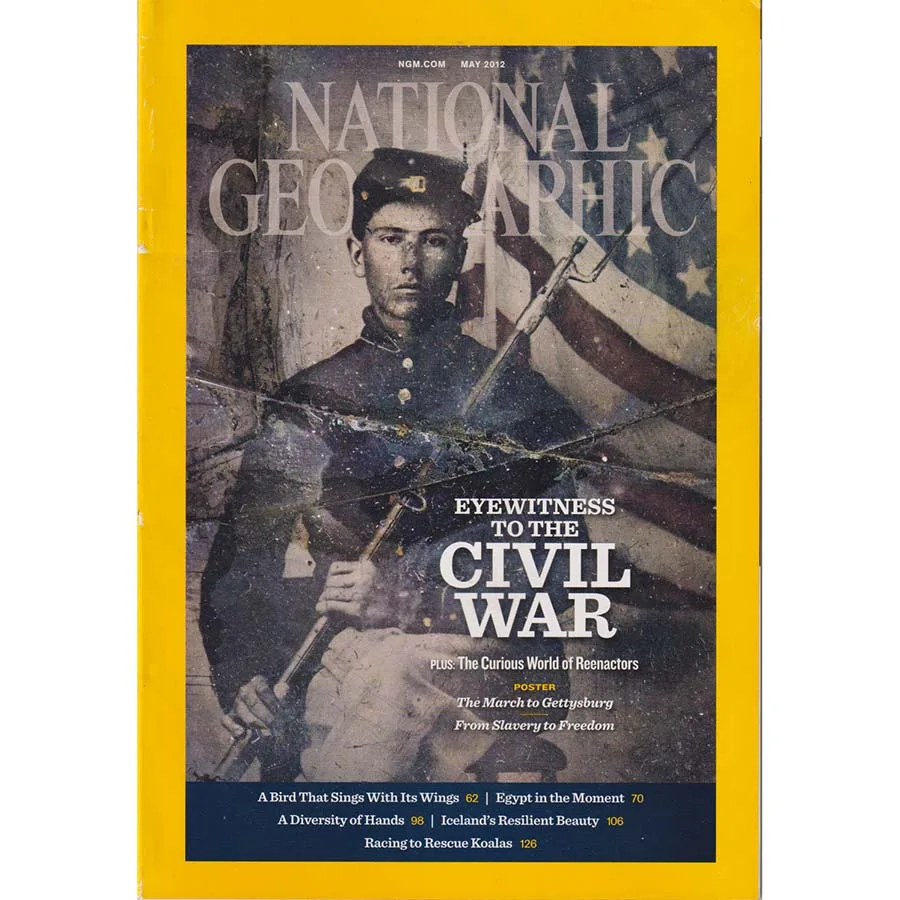
Publisher: National Geographic
Format: Paperback
ISBN: none
National Geographic, May 2012: the issue that arrives like a solemn history lesson… then quietly reveals it’s also a meditation on memory, obsession, costume accuracy, and the deeply human need to stand in the exact spot where something enormous once happened and whisper, “Blimey.”
The cover headline—Eyewitness to the Civil War—is doing that classic Nat Geo thing: taking a chapter of history you think you know, turning down the Hollywood music, and handing you the original texture. Not just grand strategy and famous names, but the grit: photographs, letters, artefacts, the awkward silence between battles, and the unsettling closeness of it all. The image itself looks like it’s been through something (much like the era), which feels oddly appropriate—time doesn’t preserve, it scuffs.
And because National Geographic can’t resist a tonal curveball, there’s also the curious world of reenactors tucked in there, like a polite cough during a memorial service. It’s the perfect companion piece: on one hand, the raw evidence of war; on the other, modern people spending their weekends recreating it with alarming sincerity and extremely specific trousers. It’s easy to smirk—until you realise reenactment is basically a live-action argument with the past: who gets remembered, how, and why it still matters.
Also included: a poster (The March to Gettysburg / From Slavery to Freedom), because nothing says “light reading” like a pull-out reminder that history is both a journey and a reckoning. Unfurl it carefully, preferably not near tea.
But this is May 2012 Nat Geo, so once you’ve stared into America’s 19th-century furnace, the magazine does what it does best: it widens the lens and drags you—gently, beautifully—across the rest of the world. You get a lineup that reads like a globe-spanning mixtape: Egypt in the moment, Iceland’s resilient beauty, a bird that sings with its wings (show-off), a diversity of hands (quietly brilliant human craft and labour), and racing to rescue koalas, which is both heartwarming and a little tragic because yes, humans managed to endanger the fluffy ambassadors too.
Condition: Good, which in Crappy Old Books language means: still handsome, still readable, and still capable of making you go from “wow” to “oh no” to “hang on, people do what on weekends?” in the space of an evening. It’s a serious issue with a sly edge—history with fingerprints on it, plus a reminder that the world is vast, weird, and relentlessly worth paying attention to.
Buy it for the Civil War. Stay for the wing-singing bird. Leave slightly more informed and faintly unsettled, as nature intended.
Keep browsing: See more National Geographic books Other books by National Geographic
